
- Tidal power discharge suppresses natural flow and increases sediment trapping
- Sluice and turbine flows resuspend sediment, slow settling, and silt channels
- Engineered releases sustain asymmetric sediment transport along the channel
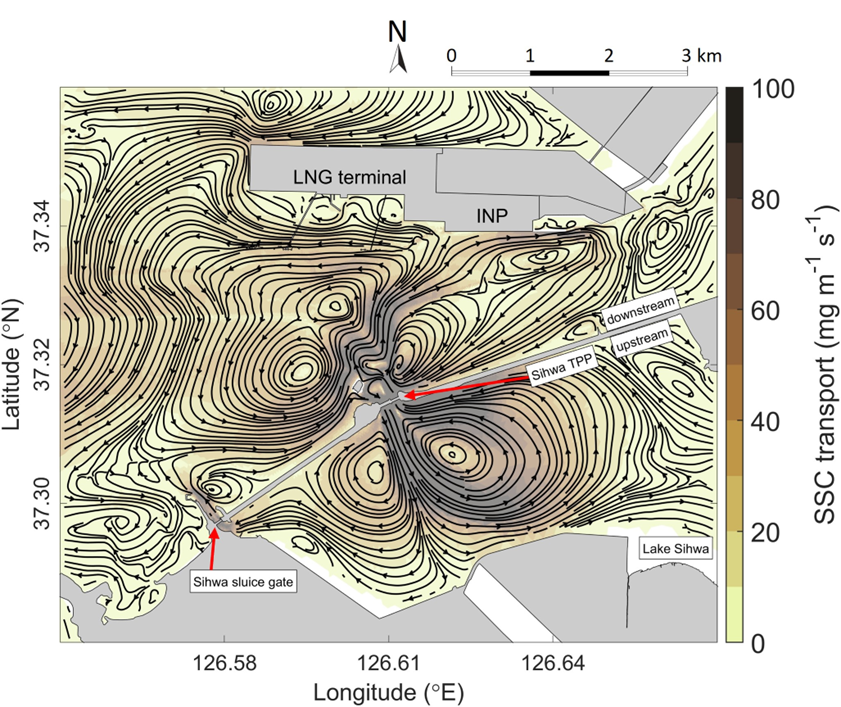
Figure 1. Artificial suspended sediment circulation structure in the Sihwa area. The black streamline represents the sediment transport pathways, highlighting the one for sediment circulation through the hydrological gates with red arrows.
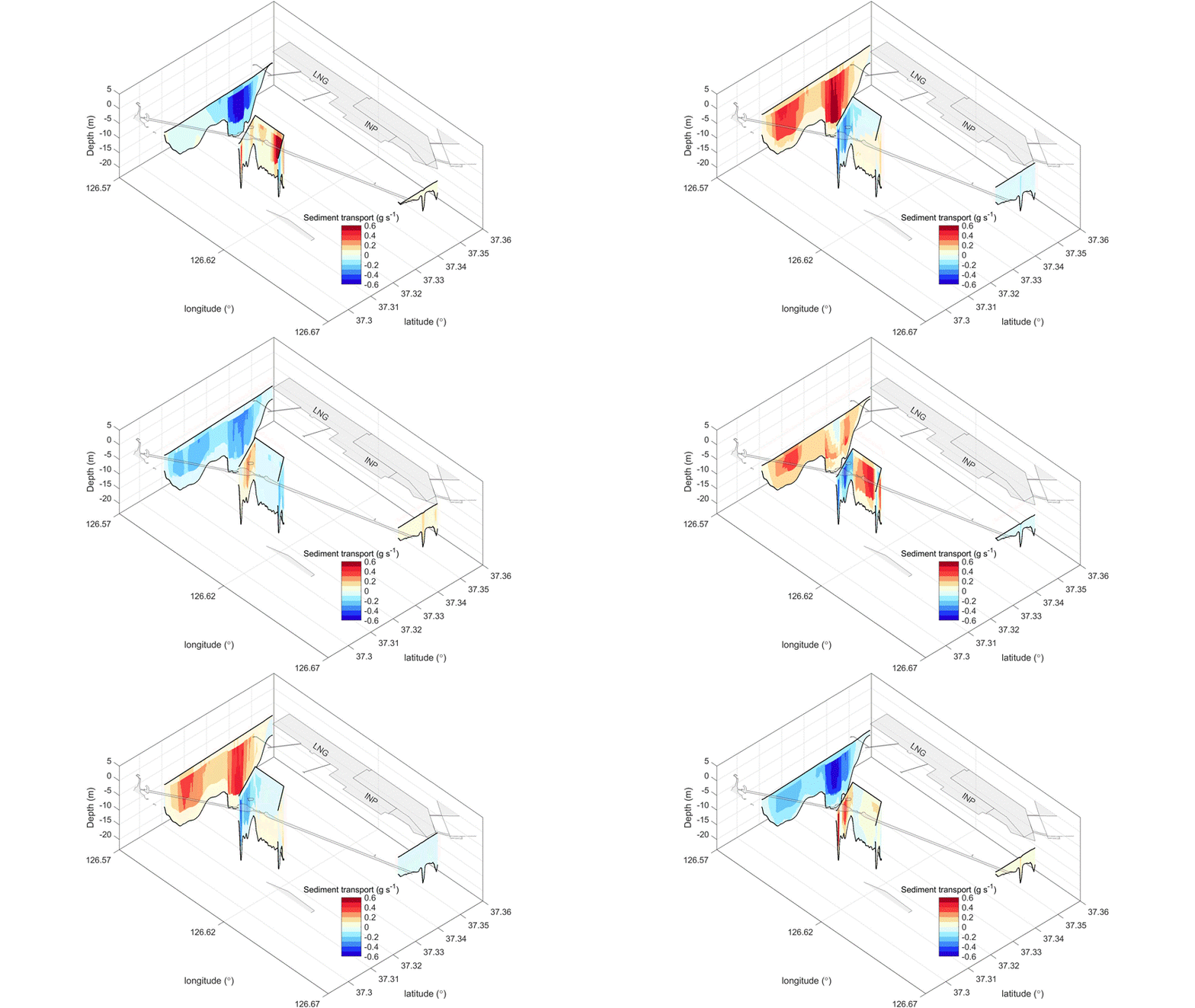
Figure 2. Hourly time series of cross-sectional suspended-sediment transport into Sihwa Bay estimated from numerical model results. Positive flux indicates inflow to Sihwa Bay, whereas negative flux indicates outflow from the bay. .
Tidal power plant discharges reorganize local hydrodynamics and reshape sediment pathways in semi enclosed coasts. This study applies a three-dimensional circulation and sediment transport model to the coastal zone adjacent to the Sihwa tidal power plant to isolate discharge driven effects by comparing scenarios with and without plant releases under identical ambient forcing and by interpreting outcomes by operating phases. Model experiments show that sluice and turbine releases generate jet like flows that intensify near bed stress, create horizontal shear and residual eddies, delay settling, and promote landward intrusion of suspended sediment during flood.Offshore directed export weakens during drainage, and a seawall parallel resuspension corridor extends the transport footprint beyond the immediate outlet region, while shallow tidally constrained sectors maintain weak exchange. The net effect is an asymmetric exchange between generation and drainage that favors import and localized entrapment near harbor basins and coastal structures. These mechanisms explain persistent accumulation observed in semi enclosed reaches and indicate that operational controls, such as discharge timing and magnitude, can moderate peak resuspension and enhance flushing without compromising energy production. The process-based evidence presented here provides a quantitative basis for targeted maintenance dredging and monitoring aligned with operating phases, and it establishes a transferable framework for assessing sediment responses around tidal power facilities.
DOI Link: -
- Project
- Research on Port Sedimentation Reduction Facilities and Their Application
- Funded by
- Ministry of Oceans and Fisheries